
Cart


Self-Tapping vs Self-Drilling Screws: What’s the Real Difference?
The terms self-tapping screws and self-drilling screws are often used interchangeably in the construction and fastener industry. However, while they are closely related, they are not the same—and misunderstanding the difference can lead to incorrect product selection.
Key takeaway:
All self-drilling screws are self-tapping, but not all self-tapping screws are self-drilling.
What is a Self-Tapping Screw?
A self-tapping screw is any screw designed to form or cut its own thread into a material during installation. This definition aligns with international fastener standards published by the International Organization for Standardization (ISO), where self-tapping screws are classified by their ability to create mating threads without pre-threaded holes.
Depending on the application, self-tapping screws:
- May be installed into a pre-drilled pilot hole
- May form threads directly into softer materials like timber or plastic
- Reduce the need for pre-threaded holes or nuts
Importantly, self-tapping refers to thread creation—not drilling capability.
Types of Self-Tapping Screws
- Thread-forming screws: Common in timber and plastics (e.g. wood screws, chipboard screws)
- Thread-cutting screws: Designed to cut threads into metal
- Self-drilling screws: A specialised subset that also drills the hole
What is a Self-Drilling Screw?
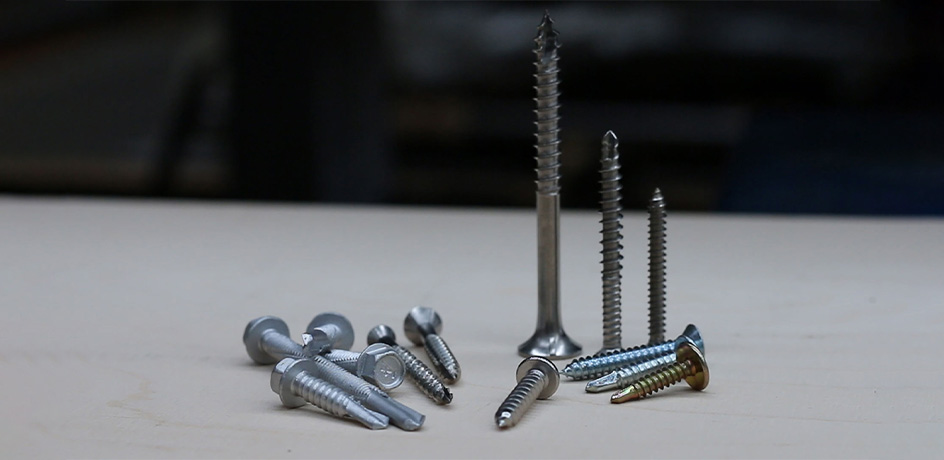
A self-drilling screw (commonly known as a TEK screw) is a type of self-tapping screw that incorporates a drill-point tip, allowing it to drill its own hole and form a thread in a single operation. This functionality is defined and performance-tested under AS/NZS 3566 – Self-drilling screws for the building and construction industries.
These screws feature a drill-bit style tip designed to penetrate steel and other hard materials without pre-drilling.
Self-drilling screws are widely used in:
- Steel-to-steel connections
- Roofing and cladding systems
- Metal framing and structural applications
Self-Tapping vs Self-Drilling: Side-by-Side Comparison
| Feature | Self-Tapping Screws | Self-Drilling Screws (TEK) |
|---|---|---|
| Primary Function | Forms or cuts its own thread | Drills hole + forms thread |
| Pre-Drilling Required | Sometimes (material dependent) | No |
| Tip Design | Sharp or fluted point | Drill-bit tip |
| Material Suitability | Timber, plastic, light metal | Steel, metal, heavy-duty applications |
| Installation Speed | Moderate | Fast (single-step install) |
Note: Classification and performance characteristics are aligned with AS/NZS 3566 and ISO fastener standards.
Do Self-Tapping Screws Require a Pilot Hole?
Not always. This depends on the material:
- Timber: Often no pilot hole required, but recommended for hardwoods to prevent splitting
- Metal: Usually requires a pre-drilled hole unless using a self-drilling screw
- Plastic: Typically no pilot hole required
Using a pilot hole can:
- Reduce installation torque
- Improve accuracy
- Prevent material damage
When Should You Use Each Type?
Use Self-Tapping Screws When:
- Working with timber or softer materials
- A pilot hole is already drilled
- Precision and control are required
Use Self-Drilling Screws When:
- Fixing into steel or metal
- Speed and efficiency are critical
- You want to eliminate pre-drilling
Common Industry Misconception
In the Australian construction industry, the term “self-tapping screw” is often incorrectly used to describe self-drilling (TEK) screws, particularly in roofing and steel applications. While this is common on-site terminology, it differs from formal standards-based definitions, where self-drilling screws are classified as a subset of self-tapping screws due to their combined drilling and thread-forming capability.
Final Thoughts
While both screw types are designed to simplify installation, their capabilities differ significantly.
Remember:
- Self-tapping screws create their own threads
- Self-drilling screws drill and create threads in one step
- All self-drilling screws are self-tapping—but not all self-tapping screws are self-drilling
Choosing the right screw depends on your material, application, and installation requirements.
References & Standards
- AS/NZS 3566 – Self-drilling screws for the building and construction industries (Standards Australia)
- ISO Fastener Standards – International Organization for Standardization (ISO 1478, ISO 7049 series)
- Standards Australia – www.standards.org.au
Related Products & Guides
About Trade News
Here, you’ll find the latest news and insights on fasteners, innovative products, and building methods in Australia’s civil, commercial, and domestic construction sectors. Join us as we explore trends, share expert advice, and keep you informed about the evolving landscape of construction.
Categories
Recent Posts