



Cart

Australia’s First Choice for Hydrajaws® Pull Testers
British-Made Quality for Australian-Grade Testing
Looking for the world’s most reputable brand in anchor and fixings pull testing?
When guaranteeing the quality of your build or integrity of safe scaffold installations for your clients or contractors, you often need the proof. With a world that is ever-increasingly focused on regulations and compliance, it makes sense to bring more and more documentation creation in-house.
Since its birth in Birmingham UK in 1960, Hydrajaws® Limited has been at the forefront of the manufacture of work-holding fixtures and then anchoring and fixings testing devices. Allfasteners are proud to bring the benefits of this history and successful track record to the Australian construction sector.
Made in the UK, and offering a range of capabilities for anchor pull testing for construction and height access installations, Hydrajaws® are leaders in quality, industry knowledge and robustness.
Shop By
Shopping Options
Which Hydrajaws® Kit Do I Need?
Choosing the right pull test kit comes down to two things: the load range and the anchor diameters you're testing. Every Hydrajaws® kit does the same core job — confirming an anchor, fixing or fall-arrest point can hold its rated load before anyone relies on it. Here's how the current range breaks down.
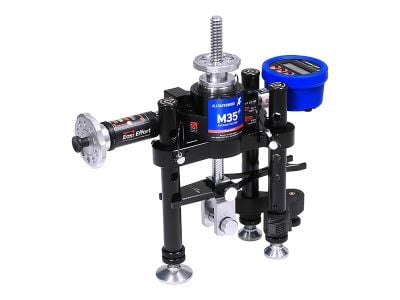
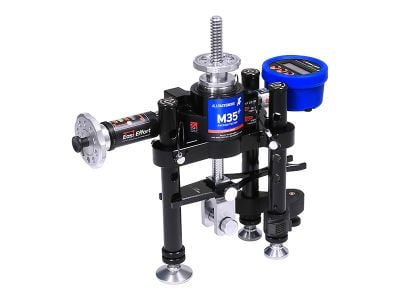
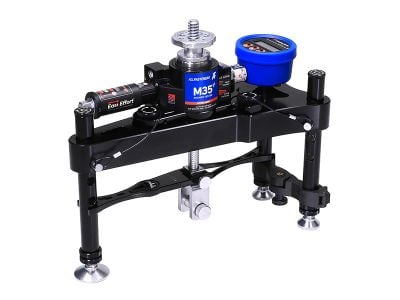
HYDRAJAWS® M35+ Standard Kit — 0–10kN hand-operated, up to 35kN
Best for: general anchor and fixing pull testing where a 35kN range covers the job, including rope access and fall-arrest anchor testing in tight or hard-to-reach spots.
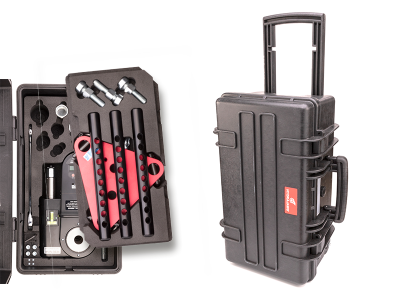
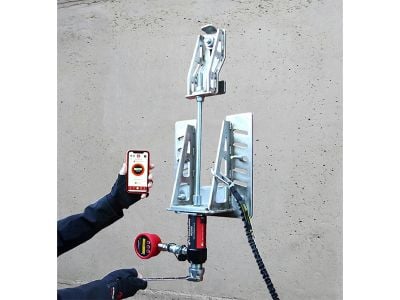
The lightest tester in the range, built around Hydrajaws' Easi-Effort® hand-wheel. The hand-wheel applies load by hand up to 10kN before switching to the ratchet for anything higher. That matters for rope access technicians specifically: personal fall-arrest anchor points are tested to 7.5kN, well within hand-wheel range, so there's no extra tool or bulky handle to carry — the tester works cleanly in confined or awkward positions. Supplied in a padded rucksack, which is the practical choice for carrying up stairs or on an abseil descent, with a hard case also available as an option.
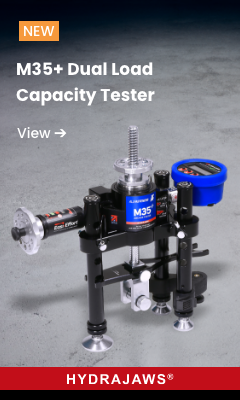
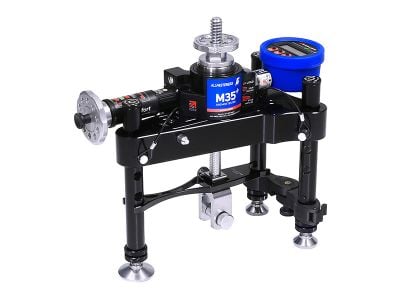
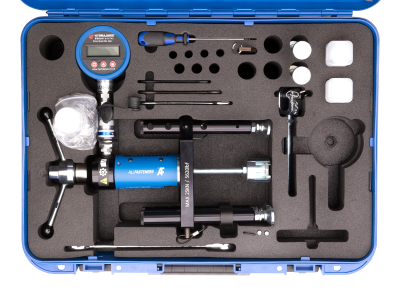
HYDRAJAWS® M35+ Dual Kit — 0–35kN standard bridge / 0–65kN with medium bridge
Best for: teams who need both the everyday 35kN range and extra reach for heavier anchors, from one unit.
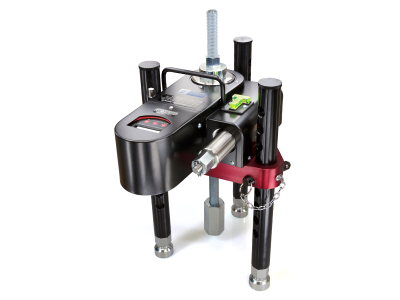
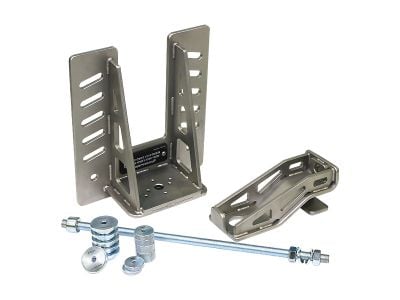
The M35+ is modular: the same load cell fits into a larger bridge to extend its rated capacity. The Dual Kit includes the standard bridge plus a medium bridge — fitting the medium bridge increases the footprint around the anchor and test cell, which is what allows the higher 65kN rating. Same rucksack-and-hard-case packaging choice as the Standard Kit.
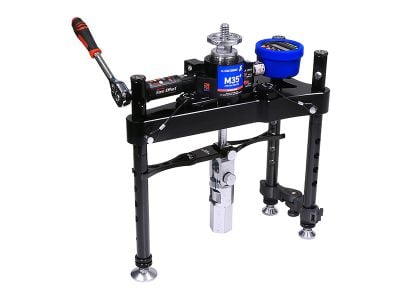
HYDRAJAWS® M35+ Pro Kit — 0–35kN / 0–65kN, up to M30 anchors
Best for: the heaviest proof-load testing in the range, and the closer match if you're replacing an M2050.
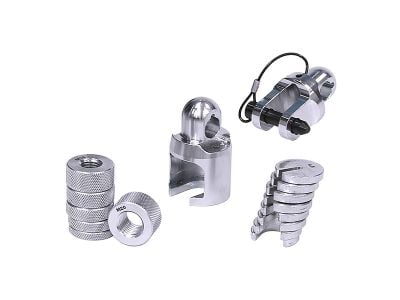
The fully-optioned M35+: standard, medium and large bridges all included, plus the M24 and M30 adaptors. Because anchors at the larger end of the diameter range need testing at the larger end of the load range, the large bridge is what takes this kit to its 65kN maximum. This is also the only M35+ kit supplied with leg extensions, giving the flexibility to clear height under the tester and position it correctly against the anchor — the same reason the M2008 HD below is built the same way. If you're upgrading from the M2050 (50kN, large bridge), this Pro Kit — not the Standard Kit — is the equivalent configuration, now at a higher 65kN capacity with a fraction of the handle effort.
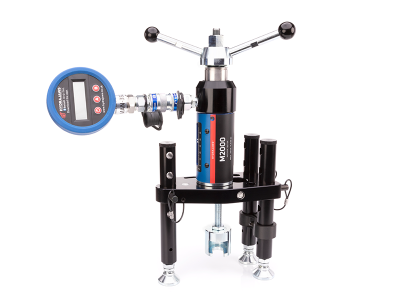
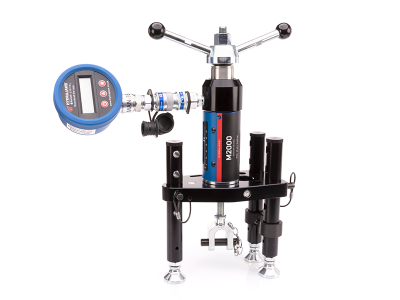
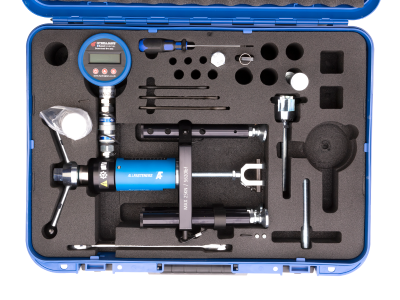
HYDRAJAWS® M2000 Pro Kit — 0–25kN
Best for: confirming holding power of anchors in general construction materials, using the bolt and button adaptor set.
HYDRAJAWS® M2000 Height Safety Kit — 0–25kN
Best for: fall-arrest and harness eyebolt testing, and confirming scaffold ties are anchored to the wall correctly.
Combines the accessories previously split across separate Scaffold and Eyebolt kits into one.
HYDRAJAWS® M2008 HD Kit — 0–145kN
Best for: the heaviest-duty proof load testing on site — and the only Hydrajaws® kit that, fitted with the right accessories, can also test rebar.
Serious equipment for serious loads: anchors from M12 up to M30, at more than double the capacity of the M35+ range. Like the M35+ Pro Kit, it's supplied with leg extensions, so the tester can be positioned and cleared correctly regardless of the anchor's height or surroundings.
HYDRAJAWS® Shear Tester (add-on)
Best for: verifying shear strength (not just pull-out strength) of anchors set in concrete or masonry.
An add-on rig, not a standalone tester — it works with a Hydrajaws M35+ or M2000 load cell you already own.
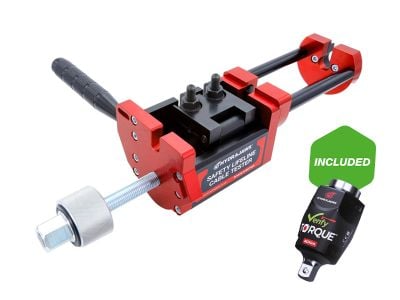
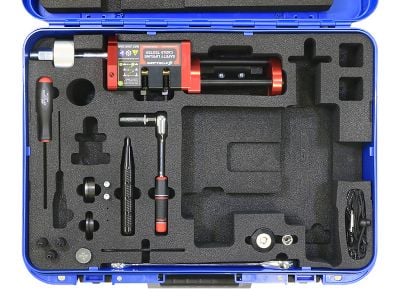
HYDRAJAWS® Safety Lifeline Cable Frame Kit 1
Best for: verifying swaged components on horizontal lifeline systems, using an M2000 or M35+ tester you already own.
Clamps onto 8mm wire rope, rated to 25kN, and includes the Verify Torque Bluetooth® wrench adaptor. Frame only — pairs with your existing tester.
What Is Anchor Pull Testing, and Why Is It Required?
Anchor pull testing (also called pull-out testing or proof load testing) applies a controlled tension load to an installed anchor, fixing, or eyebolt to confirm it holds its rated capacity before it's relied on — for a scaffold tie, a fall-arrest anchor, a safety line, or a structural fixing. A digital gauge measures the load as it's applied, and the result becomes the documented proof that the anchor is fit for purpose.
It's required because an anchor that looks correctly installed can still fail under load if the substrate is compromised, the fixing is under-torqued, or the wrong anchor was used for the material. Pull testing catches that before someone's safety depends on it, and it's the documentation site engineers and regulators ask for when an anchor point or scaffold tie is signed off.
Do I need a pull tester, or can I hire one in?
Third-party pull testing services are billed per hour and per visit, which adds up across a project or a year of scaffold work. Owning a tester means testing happens on your schedule, at no per-test cost, with results and calibration certificates you control directly.
Pull Testing & Compliance
Anchor and scaffold tie testing obligations in Australia are set by your state regulator and the relevant Australian Standards, not by a single national rule — always confirm current requirements for your state and application before relying on a test result. Useful primary sources:
- WorkSafe Victoria — Scaffolding
- SafeWork NSW — Scaffolding resource library
- WorkSafe Queensland — Scaffolding Code of Practice
How often do anchors need to be pull tested?
Testing frequency depends on the application, the anchor type, and your state's code of practice — it's set by the relevant WorkSafe/SafeWork scaffolding standard and your site engineer, not a single fixed number. Check the current code for your state (linked above) or confirm with your engineer before finalising a testing schedule.
What's the difference between the M35+ and M2000 ranges?
The M35+ is the current-generation tester — lighter, modular across three bridge sizes for a 35–65kN range from one unit, with Bluetooth® data logging via the Verify Pro App. The M2000 range remains current for its specific configurations — Height Safety and the Cable Frame Kit — where that setup is exactly what's needed.
Can a Hydrajaws® kit test rebar?
Yes — the M2008 HD, fitted with the right accessories, is the only kit in the range rated for rebar pull testing, alongside its standard anchor testing capacity of up to 145kN.
Is a calibration certificate included with test results?
Yes. Every Hydrajaws® kit ships with a 12-month gauge calibration certificate, and Allfasteners handles re-calibration when it's due.